Gareh: A Handwritten Marker Font That Brings Personality to Branding
There’s that moment when you open a blank brand board in Illustrator, staring at the artboard, wondering how to inject life into a visual identity. I was working on a local bakery’s rebrand, aiming for something warm and approachable. That’s when I decided to test out Gareh, a handwritten marker note font I’d seen floating around design circles. I was curious to see if it could strike that balance between playful and professional.
First Impressions: A Natural, Lively Script
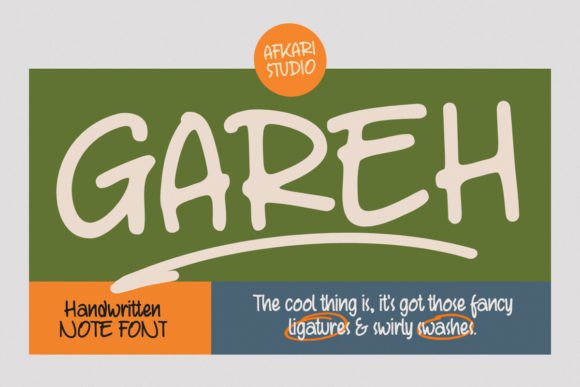
The first thing I noticed about Gareh is how organic it feels. It’s not the kind of overly polished script that screams “designed.” Instead, it carries the subtle imperfections of real handwriting—ink texture, variable stroke weight, and a sense of motion. It reminded me of those marker notes you’d find on a chalkboard in a cozy café or scribbled on a product label in a boutique shop.
I dropped it into the bakery’s logo concept and was surprised by how quickly it gave the identity a human touch. Compared to other script fonts I’ve used—like Pacifico or Allura—Gareh feels more grounded. It’s not overly elegant, but it has character. It’s the kind of font that makes you feel like someone actually wrote it by hand, not generated it with a click.
Logo Design and Brand Identity: Friendly, But Focused
For the bakery’s primary logo, I tested Gareh in a few variations—uppercase, lowercase, with and without ligatures. The lowercase version worked best, giving a casual but cohesive look. It paired surprisingly well with a clean sans serif for subheadings, which helped maintain visual hierarchy without losing warmth.
What stood out was how Gareh held up across different brand elements. I used it on a packaging mockup for cookie boxes and found it gave the design a personal, artisanal feel. On business cards, it added a touch of authenticity without looking messy. It also worked well in a social media layout—especially for quote graphics and Instagram stories, where a handwritten look can really pop.
Where Gareh Shines—and Where It Needs a Sidekick
Gareh is best used as a display or headline font. It’s expressive and eye-catching, which makes it perfect for logos, social media headers, packaging accents, and short-form branding text. But I wouldn’t recommend it for long body copy or small print. Even at 14pt, some of the character details start to blur together, especially in all caps.
It’s also not the best fit for formal corporate identities. If you’re designing for a law firm or financial service, Gareh might come off as too casual. However, for creative studios, handmade shops, lifestyle brands, or food-related businesses, it’s a strong contender.
Practical Design Tips for Using Gareh
- Test at different sizes: What looks great on a poster might not read well on a product label. Always preview Gareh in context.
- Pair with a legible companion: Try combining Gareh with a minimalist sans serif or a classic serif to balance its energy.
- Use ligatures and alternates: The font includes stylistic alternates and ligatures that add variety and prevent repetition, especially in headlines.
- Check file formats: Make sure the package includes webfont versions if you plan to use it on a website or digital asset.
I also recommend checking the font’s licensing before using it in client work. If you’re designing for packaging, merchandise, or digital templates, you’ll want to confirm that the license covers commercial use and multiple platforms.
Final Thoughts: A Go-To for Casual, Creative Brands
Gareh isn’t just another script font. It’s a versatile tool for designers who want to inject warmth and personality into a brand without veering into overly whimsical territory. Whether you’re designing a logo, packaging, or social media assets, Gareh brings a sense of authenticity that’s hard to fake.
Like any handwritten font, it needs to be used with care. But in the right context—like a boutique, café, or creative studio—it can elevate the entire visual identity. If you’re working on a project that needs a personal touch, Gareh is definitely worth testing. Just remember to pair it thoughtfully, preview it in real-world applications, and always double-check the licensing before delivering final files.